 Content Analyst at Investors Clinic
Buying a property is one of the biggest financial decisions that anyone can ever make. As factors like the location of the property, price, facilities available, and potential for appreciation are widely discussed, the legal aspect of the property is also important. One of the documents that buyers need to learn about in this process is the Encumbrance Certificate (EC).
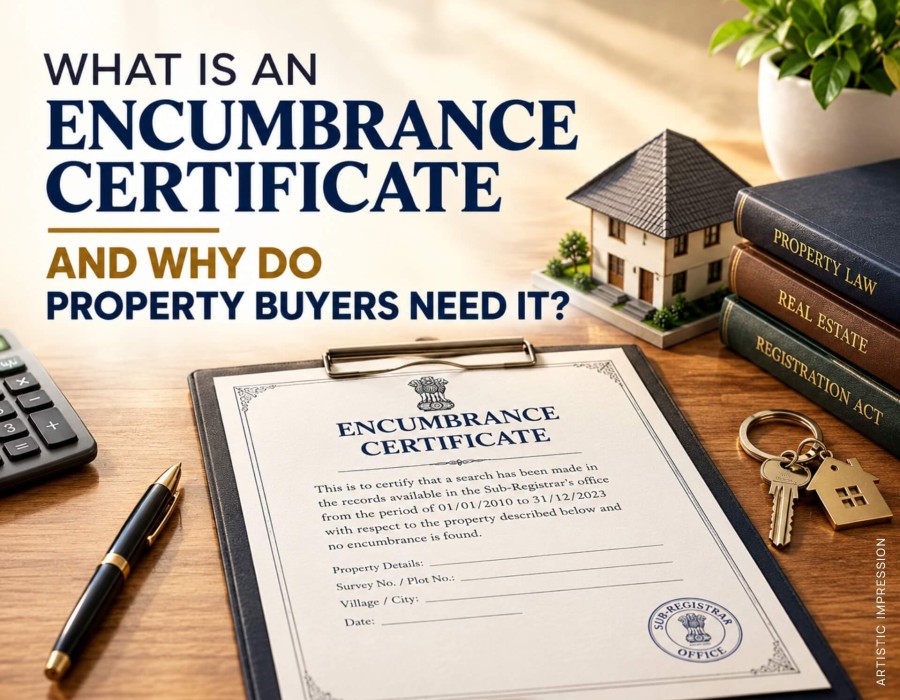
The Encumbrance Certificate provides details about the registered transactions relating to the property within a certain time period. The Encumbrance Certificate enables a buyer to look out for registered transactions such as sale, mortgage, gift, lease, release, or any registered transaction in relation to the property, depending upon the state and the records kept by the concerned registration authority. (VSWSONLINE)
The process of checking EC in case of a potential buyer is thus an essential part of the property due diligence process—but not the only one required to determine clear ownership.
What Is an Encumbrance Certificate?
An encumbrance certificate is a legal document that provides details about registered dealings or encumbrances made with regard to a specific property in a certain period of time.
Put in simpler terms, it enables the resolution of one major query, that is,
“What are the registered transactions carried out on this property during the period under consideration?”
The government registration databases refer to ECs as documents about transactions regarding a particular piece of property during the requested period.
What Information Can You Get from an EC?
Depending on the legal regime and the type of data available, an EC may contain items such as
- Information about the property being identified
- Registration number
- Dates of registered transactions
- Type or nature of the deed
- Names of the parties
- Consideration or details regarding the transaction
- Mortgage or other charges, if any, registered
- Relevant registration office data
An official registration document from the State of Odisha defines an EC as one that contains registered transactions of sale, lease, mortgage, gift, partition, and release for the period to which the certificate relates. (Igrodisha)
Why Is the Encumbrance Certificate Useful for Property Buyers?
The EC can become a very useful component of the property document verification process for buyers since it allows them to find out the registered transactions related to the property.
1. Helps Recognize Registered Liabilities/Transactions
There might be some registered liabilities or transactions with the property that must be known to the buyer before making any decision to buy it.
Checking the EC is necessary to identify the entries of mortgages and/or other registered transactions. The buyer can then get all clarifications from the seller and documents confirming the transactions.
2. Assists in Title Verification Process
The EC can be very helpful in verifying the property title.
Indeed, it cannot substitute for a full title search. The buyer needs to check the title deed, sale deeds, etc., as well.
3. Assists in Buyer Due Diligence
Due diligence on real estate involves investigating matters other than just the look and appeal of the property.
Before acquisition, the buyer would be expected to ideally check:
- Owner and title deeds
- Past transactions that have been recorded
- Encumbrances and mortgages
- Property tax records
- Approved plans and permissions (as may apply)
- Details from RERA (for applicable projects)
- Documents for possession and development
- Court/authority records (where required)
- EC forms are part of this entire process.
EC vs. Clear Title—What Is the Difference?
Though these concepts are used interchangeably, there is no equivalence between the two.
|
Aspect |
Encumbrance Certificate |
Clear Title |
|
Main aim |
To show encumbrances registered in the system for a certain period |
To determine if ownership rights are clear legally |
|
Main focus |
Transactions registered on the property |
Ownership rights and title |
|
Generated by |
Registration authority |
Involves checking the title deeds and records |
|
Indicates transaction history |
Yes, but only within the period under consideration |
Part of title examination in general |
|
Can it be used independently? |
No |
Requires comprehensive legal due diligence |
Therefore, a purchaser must see the EC as one of the important verification documents of a property, not its full legal evaluation.
How Does an Encumbrance Certificate Serve in the Pre-Purchase of Property?
Steps for practical verification of property:
Shortlisted property → Document check → EC check → Check registered transaction → Verify other documents → Legal due diligence → Purchasing of property
This will enable the buyer to make decisions on the basis of documented information rather than just verbal information.
How Do You Get an Encumbrance Certificate?
The method of getting an EC is state-specific. In many parts of India, there are online services for the EC from registration departments, and in addition to that, offline facilities are available for EC applications from the respective registration department.
For instance, the National Portal of India has listed online EC services from registration departments of states like Tamil Nadu.
Some of the things needed for your application could be
- Details about the property
- Information about survey/plot, if any
- Details about the Sub-Registrar Office
- Information about the previous documents
- Period of search
- Applicant’s information
The specifics will vary based on the state/registration department concerned. For instance, Kerala's guidelines for the official EC application include property details and previous document information.
EC Items Buyers Should Inspect
The receipt of the EC is just the beginning. Buyers must match all details listed in the EC with the documentation provided by the seller.
Consider:
Details on Property
See if the property description is the same as the property that the buyer intends to buy.
Transaction Details
Inspect the recorded transactions in the search period and know the history of ownership.
Encumbrances
In case there is a mortgage or any encumbrance, ensure that you have evidence that it is paid off before anything else.
Parties' Names and Date
Match the names of parties and the dates of transactions with the sale deed and the old documents of title.
Search Period
The search period mentioned on the EC should be given a great deal of attention. EC just shows details about the search done in the said period.
The Non-Proving Features of an EC
The key aspect for a property purchaser is that an EC does not necessarily prove that there can never be any legal problem in the case of the property.
An EC essentially means what is recorded on the records of registration for the specified period. The issues that are not registered, not mentioned in the searched records, and need to be found out from other records of government or court can not be proven merely through an EC.
Thus, the purchasers must consider an EC along with:
- Verification of title chain
- Sale deed and earlier deeds
- Revenue and land records
- Tax records
- Approvals
- RERA record for registered projects
- Legal search, wherever required
- Legal advice, wherever required
Summary
An Encumbrance Certificate is a very useful instrument in case any person is thinking of purchasing real estate in India. The Encumbrance Certificate can give information regarding any registration transactions that have been registered in connection with that particular property over the given period of time.
But effective real estate investment requires doing much more than obtaining one certificate only. Encumbrance certificate verification, title research, document verification, approval process, and legal due diligence should all be combined in order to get a more accurate idea of the legal standing of the property.
Invest some effort in verifying the property documents before signing a purchase agreement or making a large payment. Just a few additional steps today will help you to become a better-informed investor tomorrow. Consult your best real estate consultant for any technical and legal understanding.