 Content Analyst at Investors Clinic
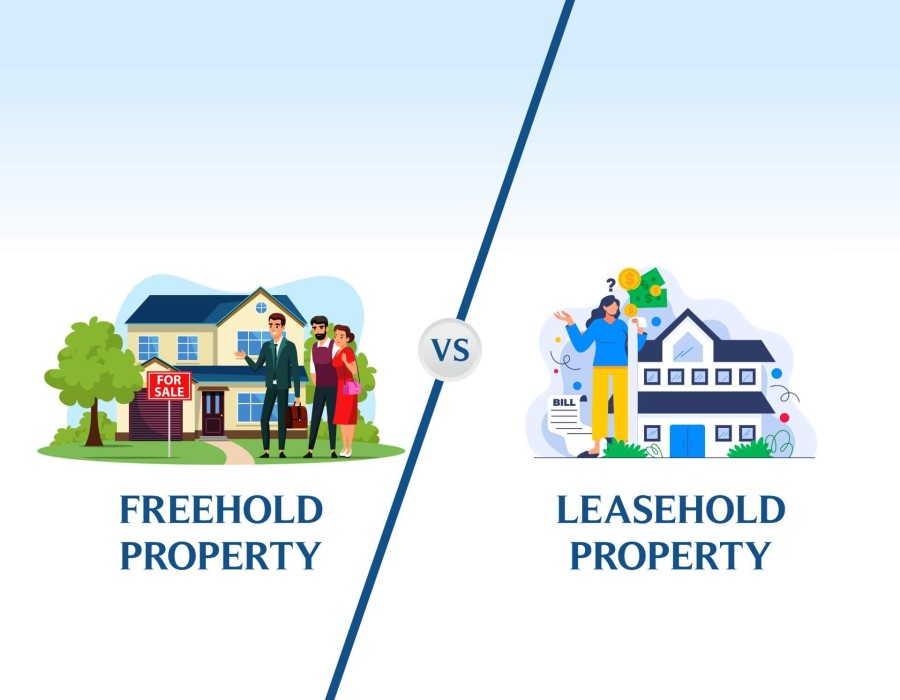
Freehold property or a leasehold property - If you are currently navigating the market with real estate consultants, you have likely heard these terms tossed around. But let us strip away the jargon.
In a freehold property you completely own the building and the land it sits on with no expiry date and no renewal fees. It is yours until you plan to sell. However, in a leasehold meaning you can consider it as a long period of rental agreement. You own the home but the land on which it is constructed belongs to someone else (usually the government or a developer).
This is where the anxiety creeps in for many investors. You might find a beautiful leasehold house in a prime location at a discounted rate. It looks like a steal. But why is it cheaper? Because you do not truly own the ground.
Difference between Leasehold and Freehold
The most critical difference between leasehold and freehold is the ticking clock.
In freehold: Time is irrelevant to ownership. The land value appreciates purely based on location and demand.
In leasehold: The property is a depreciating asset. When you buy a lease, you buy a specific number of years (often 99 or 999).
As the lease clock runs down, the property value often stagnates or drops. Banks become hesitant to lend on a property with a low lease balance. You are left with an asset that is expensive to maintain but difficult to sell.
Beyond the expiry date, the financial obligations differ wildly:
Freehold Property Obligations
- Taxes: You pay property tax directly to the municipal corporation.
- Maintenance: All responsibility own by you related to water leakages and so on.
- Freedom: You are free to renovate, demolish, or modify without seeking anyone’s permission.
Leasehold Property Obligations
- Ground Rent: You pay annual rent to the landowner for using the land.
- Restrictions: For any kind of modification or commercial setup you need a written consent from landowner.
- Conversion Fees: In regions like Delhi NCR, you often have the option to convert leasehold vs freehold. This costs significant money—usually a percentage of the land value.
The Market Reality: Liquidity and Loans
If you ever need to sell, freehold vs leasehold property becomes a game of buyer psychology. Buyers trust freehold. It is clean, simple, and permanent. Leasehold sales often involve extensive due diligence regarding the remaining tenure and the lessor’s permission.
Furthermore, financial institutions prefer freehold. While you can get a loan for leasehold, the Loan-to-Value ratio is often lower. The lender knows that if you default, recovering money from a time-bound lease is harder than selling freehold land.
Properties in Delhi NCR Perspective
This debate is particularly relevant when looking at Properties in Delhi NCR. Historically, much of the land in Noida, Greater Noida, and Delhi itself was allotted on a leasehold basis by authorities like Noida Authority or DDA.
However, the market is shifting. Many colonies that were originally leasehold have seen massive appreciation after conversion to freehold. If you are consulting with real estate consultants, ask them specifically about the lease balance. A property with 90 years left is very different from one with 30 years left.
Freehold vs Leasehold Property
Difference between leasehold and freehold property at a glance.
|
Freehold Property |
Leasehold Property |
|
Owner holds both land and building. |
Owner holds building; landlord holds land. |
|
No expiration of ownership rights. |
Ownership expires on lease end date. |
|
Higher initial cost, but better long-term value. |
Lower entry price, but ongoing ground rent. |
|
Minimal legal restrictions on usage. |
Requires landlord approval for major changes. |
|
Preferred by banks for high loan amounts. |
Can be converted to freehold |
Final Verdict
If you are looking for ancestral legacy or long-term capital gains, freehold is the only answer. It is the peace of mind that no bureaucracy can take your roof away. Leasehold makes sense in specific scenarios - prime locations where freehold is unavailable or short-term holds where the lease is extremely long. It allows buyers to enter premium neighborhoods at a discount.
Before you sign any check, walk the land. Look at the soil. Ask yourself if you want to rent the right to stand there, or if you want to own it. Your answer will determine not just where you live, but how you live.